Historian & Painter · Chelles, France
Helen Thornton Powles
Helen writes the lives history left in the margins, and paints the line that carries them — from a seventh-century queen exiled to Neustria, to the serpentine energy of William Blake's own pen.
Line as Energy
Watercolour
Ceramics
Northumbria
Line as Energy
Watercolour
Ceramics
Northumbria
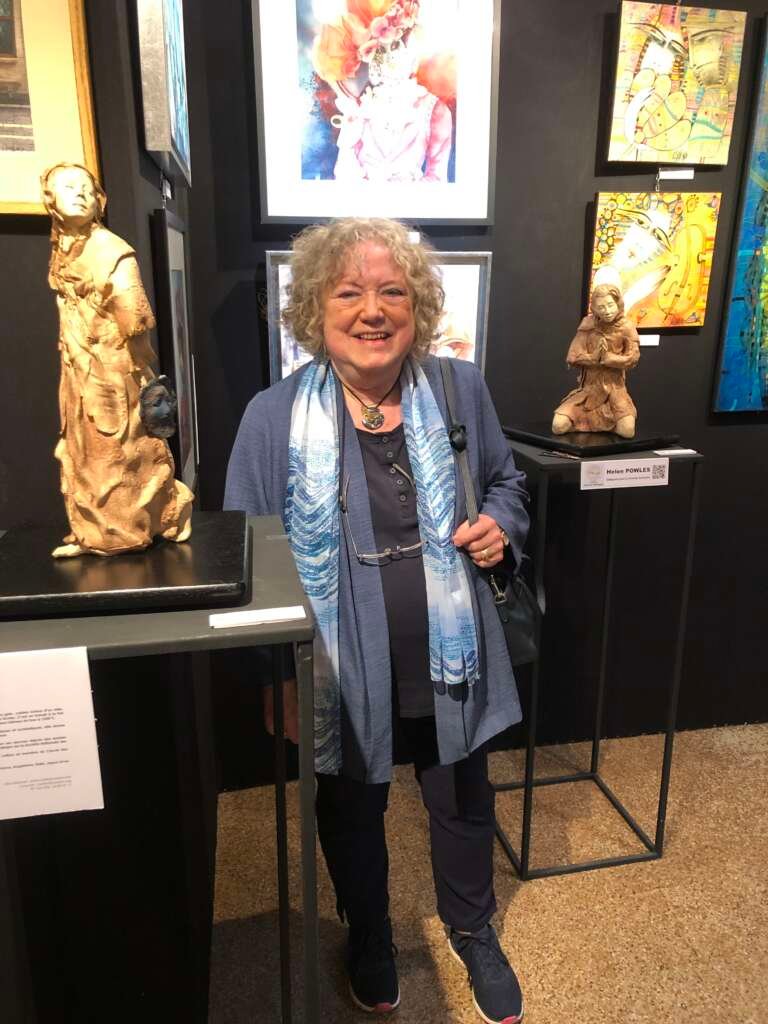
About the Artist
A northerner's eye, an
adopted
river
Helen Thornton Powles moved to Chelles, on the River Marne east of Paris, in 1985. Trained in Old English at university and long occupied with both the written and the painted line, she became fascinated by the small town's oldest history — the Royal Abbey of Chelles, and the Anglo-Saxon women, Queen Bathilde among them, who once ruled its cloister.
"I found the portraits of Bathilde and two princesses, both Northumbrians, in the old church of Saint André — and the past quietly placed itself in front of me."
What began as a stained-glass window became years of research into Bede, into the genealogies of Deira and East Anglia, and into a story almost unknown in her own country of origin: that of Hereswithe, niece of a king, and her sister Hilde, who became Abbess of Whitby. That research, and a parallel, lifelong study of line and energy in the work of William Blake, now sit alongside her paintings as two ways of doing the same work — following a line back to where it began.
Works in Print
Two subjects, one obsession with the line
A reconstructed history of two seventh-century Anglo-Saxon saints, in English and in French, and a study of the graphic and visionary line in the work of William Blake.
History · English edition
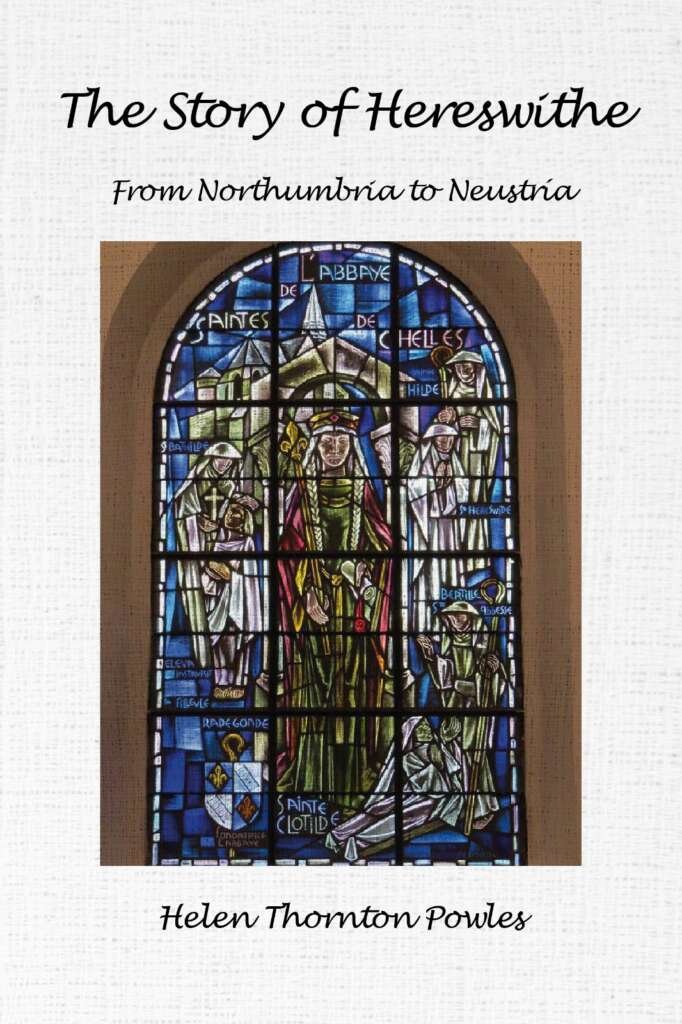
The Story of Hereswithe
A reconstructed life of a seventh-century Northumbrian princess — niece of a king, queen of East Anglia, and later a nun at the royal abbey of Chelles — traced through Bede, genealogy and the little that survives of the women of the early Anglo-Saxon world.
Histoire · Édition française
L'Histoire d'Hereswithe
The complete French translation of Hereswithe's story, prepared for the readers of Chelles and the Marne valley where much of this history — and the abbey at its centre — actually took place.
Art history · Criticism
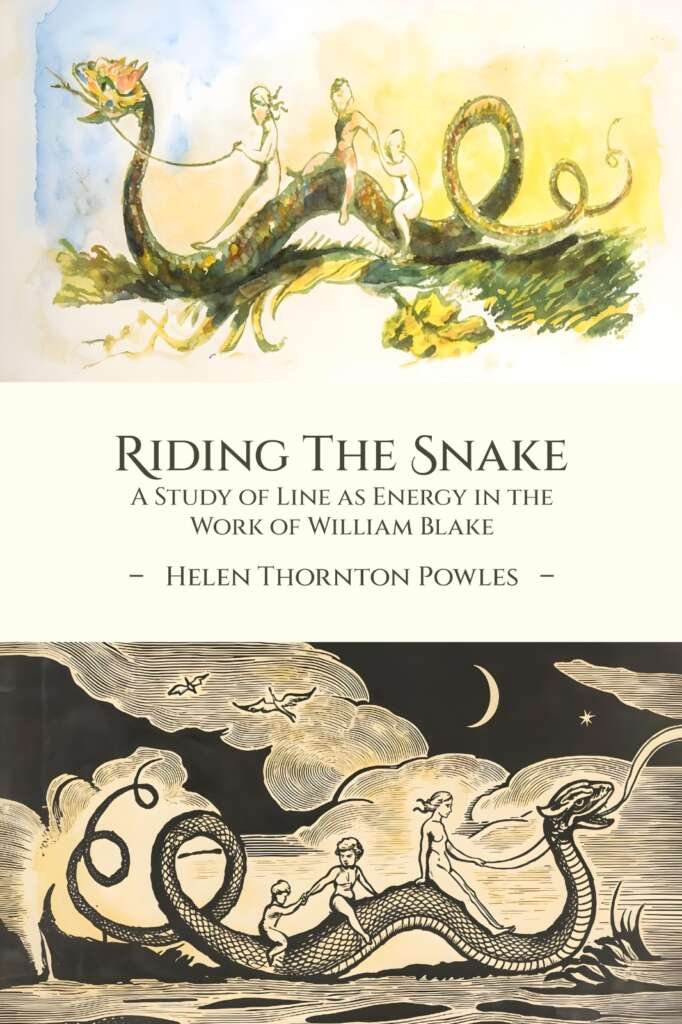
Riding the Snake
A study of line as energy in the work of William Blake — the dividing line, the engraved line, the narrative and the visionary line — read by a working artist as much as a scholar, with a cover painted by the author.
Portfolio
Sculpture & further work
Four collections, browsable by category. Each opens onto the full set of pieces, with notes on medium and, where applicable, current collection or exhibiting museum.
Placeholder description — one to two lines on what this collection is and where it was made.
Placeholder description — one to two lines on what this collection is and where it was made.
Placeholder description — one to two lines on what this collection is and where it was made.
Placeholder description — one to two lines on what this collection is and where it was made.
Praise
From readers & collectors
A few words on the books and the paintings. Placeholder copy below — swap in real quotes whenever they're ready.
Placeholder testimonial — a line or two on the depth of research and how the story of Hereswithe reads against the little that survives of her.
Name to come — Reader
Placeholder testimonial — a line or two on the depth of research and how the story of Hereswithe reads against the little that survives of her.
Name to come — Reader
Placeholder testimonial — a line or two on the depth of research and how the story of Hereswithe reads against the little that survives of her.
Name to come — Reader
Stay in touch
New chapters, studio notes, show dates
An occasional letter new research on Hereswithe and Chelles, progress from the studio, and word when a series goes on show.